
 Schedule Appointment
Porcelain Veneers vs. Composite Veneers: What’s the Difference?
Two Paths to a Better Smile — Which One Fits You?
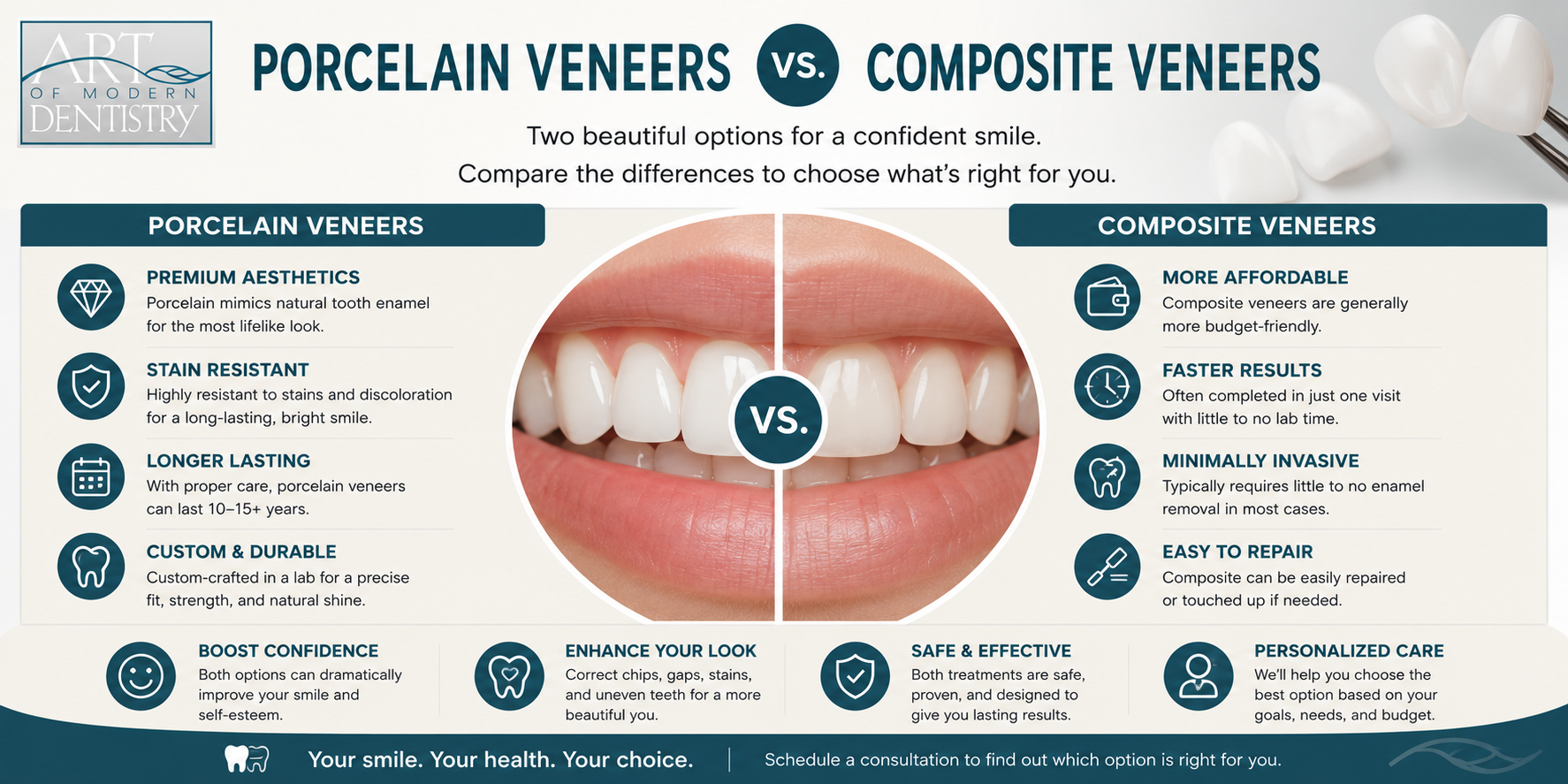
Veneers are one of the most effective cosmetic dental treatments available — but not all veneers are made the same way, from the same material, or built to last the same amount of time. Porcelain and composite veneers both correct chips, gaps, stains, and uneven teeth. The difference is in how they do it, how long they last, and what the process looks like.
At Art of Modern Dentistry, with offices in Lincoln Park and the South Loop, the team offers both options and recommends based on your specific goals, timeline, and the condition of your teeth — not on what is easiest. This guide gives you the honest comparison.
The Core Difference: Material and How They Are Made
Porcelain veneers are thin, custom-made shells fabricated in a dental lab. They are made from high-quality ceramic that closely mimics the light-reflecting properties of natural tooth enamel — giving them the most lifelike appearance of any veneer material. Because they are lab-made, the process requires at least two appointments: one to prepare the teeth and take impressions, and a second to bond the finished veneers.
Composite veneers are made from tooth-colored resin — the same material used for dental bonding — applied directly to the tooth surface by the dentist and shaped by hand in the chair. Because there is no lab involved, they can often be completed in a single visit. The trade-off is that composite is more porous than porcelain and more prone to staining and chipping over time.
- Lasts 10–15+ years
- Highly stain resistant
- Most natural appearance
- Lab fabricated — 2+ visits
- Requires some enamel removal
- Best for full smile makeovers
- Higher upfront investment
- Lasts 3–7 years
- Can stain over time
- Good natural appearance
- Completed in 1 visit
- Minimal to no enamel removal
- Best for minor corrections
- More affordable upfront

Appearance: How Different Do They Actually Look?
Both porcelain and composite veneers can produce beautiful results in skilled hands. The visible difference comes down to translucency. Natural tooth enamel is slightly see-through — light passes through it, giving teeth their depth and life. Porcelain closely replicates this. Composite resin is more opaque, which means composite veneers can look slightly flatter or less lifelike, particularly in strong lighting.
For patients correcting a single chipped tooth or a small gap, composite is often completely indistinguishable from a natural tooth. For a full smile makeover covering eight or ten teeth, porcelain typically delivers a more consistently natural, long-lasting result.
The Procedure: What Each One Involves
- Porcelain veneer processAt the first appointment, a thin layer of enamel is removed from the tooth surface to create space for the veneer. Impressions or digital scans are taken and sent to a dental lab. Temporary veneers are placed while the permanent ones are fabricated. At the second appointment, the finished porcelain veneers are bonded. The enamel removal is permanent — the tooth will always need a covering — which is why this decision deserves careful consideration.
- Composite veneer processThe dentist applies composite resin directly to the tooth, sculpting and shaping it by hand before curing it with a special light. Little to no enamel removal is required. The process is completed in one visit and, because no permanent tooth structure is altered in most cases, is more reversible than porcelain.
Composite veneers cost less upfront but need replacement more frequently. Porcelain veneers cost more initially but last two to three times longer and resist staining far better. Over a 15-year period, the total cost of maintaining composite veneers may approach or exceed the cost of porcelain. The better long-term value depends on how many teeth are being treated and how much staining risk your lifestyle presents.
Which Option Is Right for You?
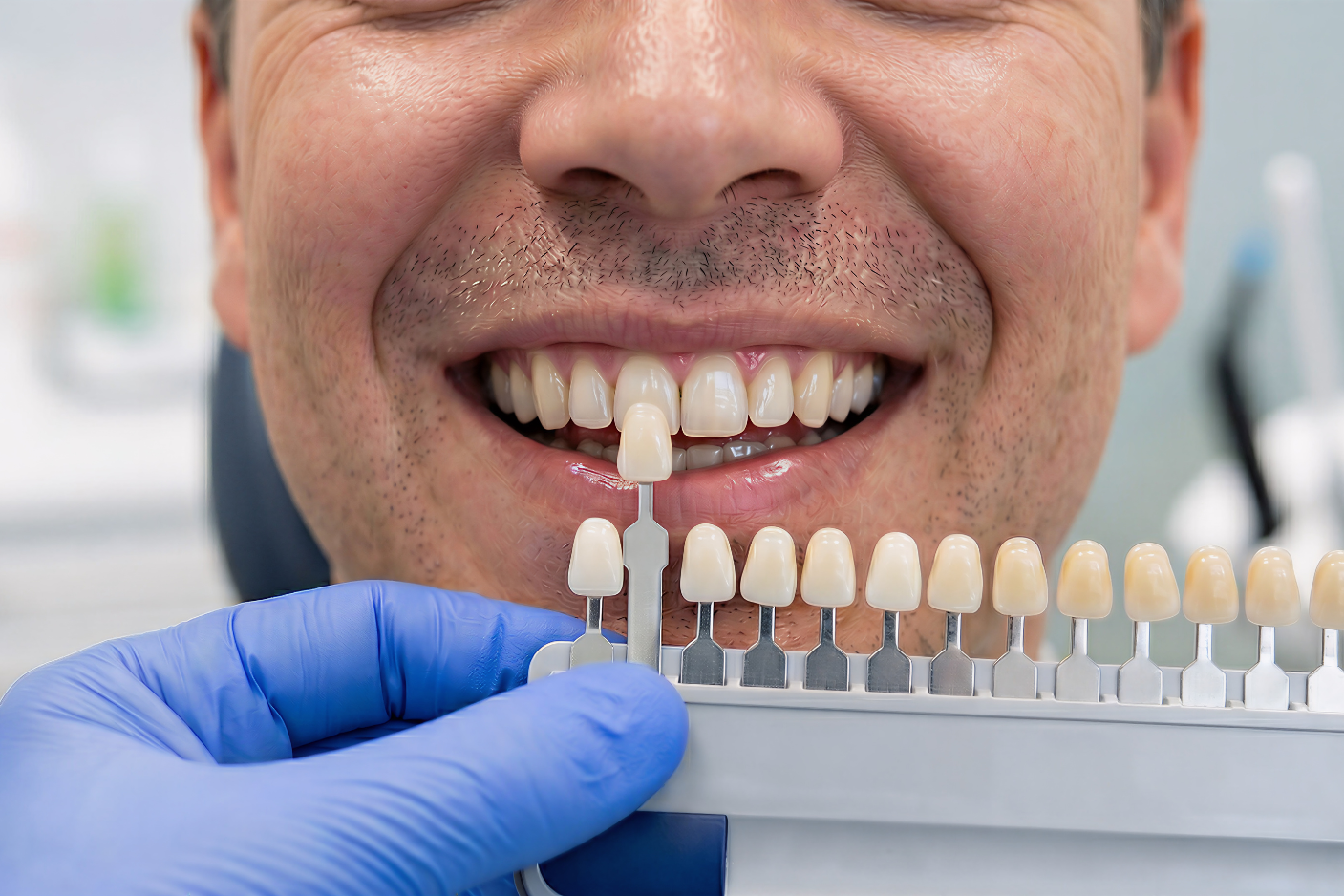
- Porcelain veneers are usually the better fit if…You want a full smile transformation covering multiple teeth, stain resistance is important to you (coffee, tea, red wine), you want the longest-lasting result, or you are correcting significant discoloration, shape issues, or size discrepancies.
- Composite veneers are usually the better fit if…You need a single tooth corrected, you want to see a result quickly in one visit, you are on a tighter budget or want to try a cosmetic change before committing to porcelain, or your concern is a minor chip or small gap.
- The honest answerThe right choice depends on your teeth, your goals, and your budget together — not on one factor alone. A consultation that includes an examination of your existing enamel, gum health, and bite is the only reliable way to get a recommendation tailored to your actual situation.
Frequently Asked Questions
Are porcelain veneers better than composite?
How long do composite veneers last compared to porcelain?
Do veneers require removing tooth enamel?
Can composite veneers be upgraded to porcelain later?
Do veneers look fake?
Find Out Which Veneer Is Right for Your Smile in Chicago
The best way to choose between porcelain and composite is a consultation that looks at your actual teeth, enamel, and goals. Art of Modern Dentistry can show you what each option would look like for your smile.