 Schedule Appointment
Dental Implants vs. Dentures: Which Is Right for You?
Which Tooth Replacement Option Is Right for You?
If you are missing teeth — or facing the loss of several — two options come up in almost every conversation: dental implants and dentures. Both restore your smile and your ability to eat and speak, but they work very differently, and the right choice depends on your bone health, your lifestyle, and your long-term goals.
At Art of Modern Dentistry, with offices in Lincoln Park and the South Loop, the team evaluates both options based on your specific situation rather than defaulting to one solution. This guide breaks down the real differences so you can walk into a consultation already knowing the right questions to ask.
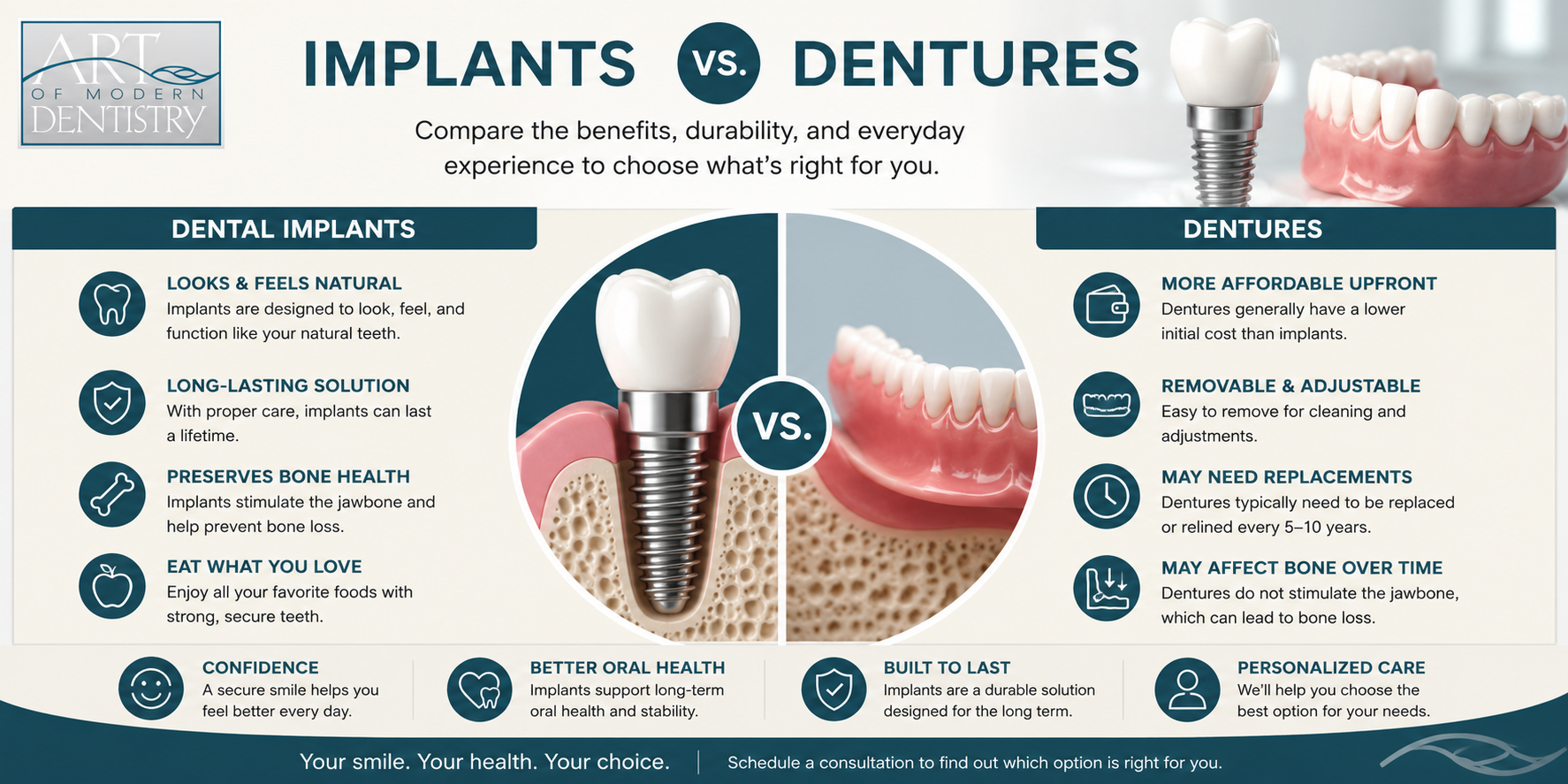
The Core Difference: Fixed vs. Removable
A dental implant is a titanium post surgically placed into the jawbone, acting as an artificial tooth root. A crown, bridge, or full-arch prosthesis is then attached permanently — it does not come out and functions like a natural tooth.
A denture is a removable appliance that rests on the gum tissue and is held in place by suction, clasps, or adhesive. It is taken out for cleaning and sleeping. Almost every other difference between the two flows from this one distinction.
- Permanently fixed in the jaw
- Prevents jawbone loss
- Functions like natural teeth
- No adhesives or removal
- Designed to last a lifetime
- Preserves facial structure
- No food restrictions
- Removable appliance
- Bone loss continues over time
- May shift while eating or speaking
- Requires adhesives
- Needs relining or replacement every 5–10 years
- Facial shape changes as bone resorbs
- Some food limitations

Why Bone Health Is the Critical Factor
Implants require adequate jawbone density — the titanium post fuses to bone through osseointegration, and that only works with enough bone to anchor into. Patients missing teeth for a long time may have experienced bone resorption, which can require a bone graft before implants are placed.
This is also why acting sooner matters. Every year a tooth is missing, the jawbone in that area continues to deteriorate. Dentures provide no stimulation to the bone underneath — implants, because they function like tooth roots, actively preserve it.
Even patients with some bone loss may still be candidates for implants. A 3D cone-beam scan at Art of Modern Dentistry maps your exact bone density before any plan is designed — so the recommendation is based on your actual anatomy, not a general assumption.
Who Is a Candidate for Each Option
- Good candidates for dental implantsAdults in good general health with adequate jawbone density (or who are candidates for grafting), non-smokers or those willing to quit during healing, and anyone seeking a permanent, low-maintenance solution.
- Good candidates for denturesPatients who are not surgical candidates due to health conditions, those who prefer a non-invasive and faster solution, or patients with significant bone loss who are not candidates for grafting.
- Implant-supported dentures — a middle pathTwo to four implants anchor a removable or fixed full-arch prosthesis, eliminating slipping and adhesives while preserving some bone. A strong option for patients who want more stability than traditional dentures.
The Planning and Treatment Process
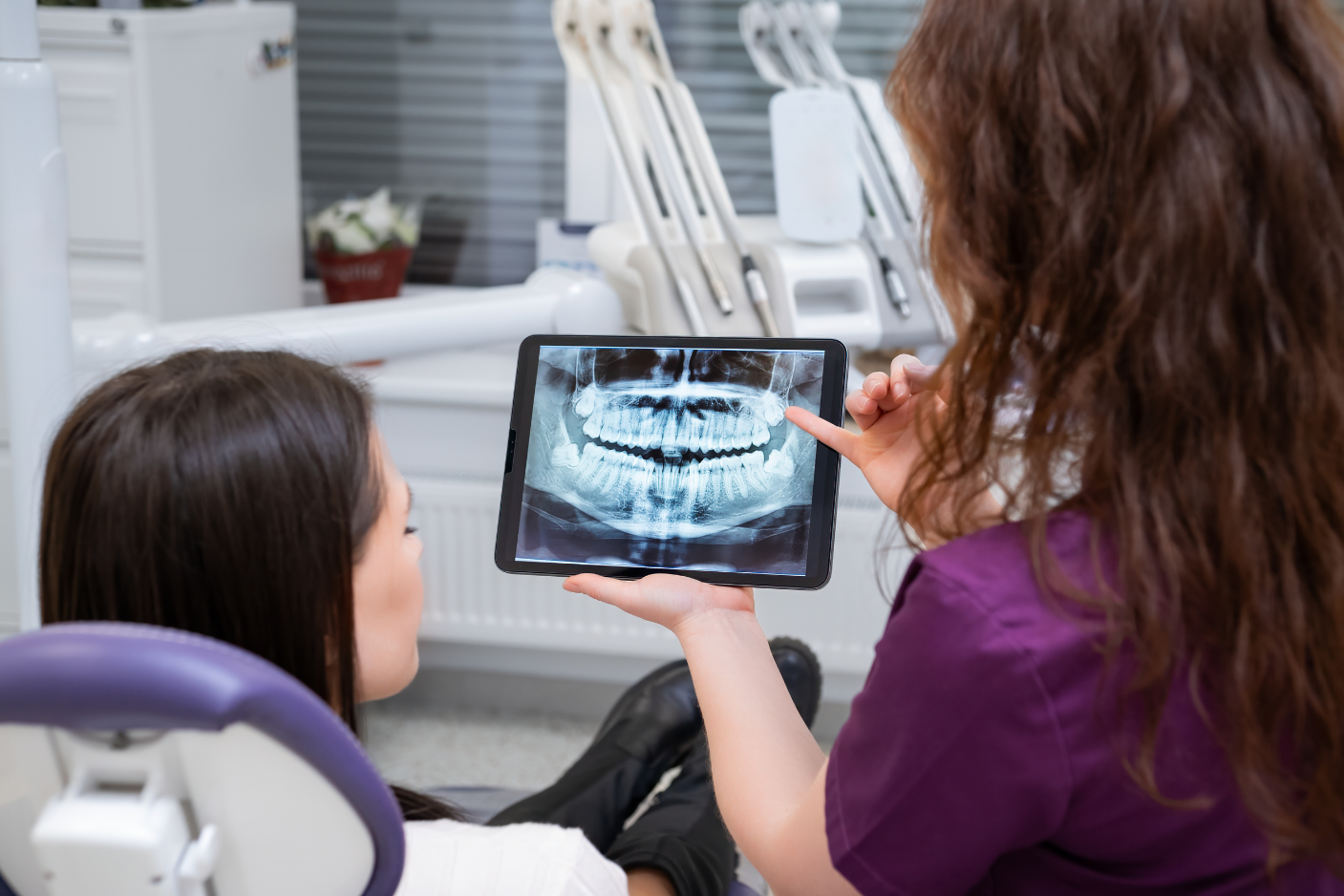
Every implant case at Art of Modern Dentistry begins with a comprehensive evaluation including a 3D cone-beam scan to assess bone density, nerve position, and anatomy. The team then designs a sequenced treatment plan — which may include extractions, bone grafting, implant placement, healing time, and final restoration.
Dentures move faster: impressions are taken, the prosthesis is fabricated, and fitting appointments confirm the fit and bite. Immediate dentures can even be placed the same day as extractions, though they typically require relining as the gums heal and reshape.
Frequently Asked Questions
Are dental implants better than dentures?
Why would a dentist not recommend implants?
Can you switch from dentures to implants?
Are dental implants covered by insurance?
How long do dental implants last compared to dentures?
Find Out Which Option Is Right for You in Chicago
The best way to choose between implants and dentures is a consultation with a 3D scan so any recommendation is based on your actual bone, health, and goals.