
Root Canal Treatment
Gentle Root Canal Treatment in Chicago
If you have been told you need a root canal, the word probably lands harder than it should. Modern root canal treatment is nothing like its reputation. It is the procedure that ends the pain rather than causes it, and it is the reason a tooth that would once have been pulled can stay in your mouth for the rest of your life.
At Art of Modern Dentistry we treat the inside of the tooth with the same care we would give a cosmetic case. You are numb before anything starts, you know what is happening at each step, and most people tell us afterward that it felt no different from having a filling done.
We see patients from across Chicago at our South Loop and Lincoln Park offices. If a tooth is keeping you up at night, we hold time each day for urgent cases.

Know the signals
Signs You May Need a Root Canal
Not every ache means the nerve is involved. These are the symptoms that usually do, and they are worth acting on early. An infection inside a tooth does not resolve on its own, and the longer it sits, the more of the tooth there is to rebuild.
Pain That Will Not Quit
A constant or throbbing ache that over-the-counter medicine barely touches, especially pain that wakes you at night.
Lingering Hot and Cold
Sensitivity that keeps hurting for 30 seconds or more after the hot drink or cold water is gone, rather than passing right away.
Pain When You Bite
Sharp discomfort when chewing or when pressure is applied to one specific tooth.
Swelling or Tenderness
Puffiness in the gum near the tooth, a tender jaw, or swollen lymph nodes on that side.
A Darkening Tooth
One tooth turning grey or noticeably darker than its neighbors often means the pulp inside has died.
A Bump on the Gum
A small pimple-like spot near the root that may drain and leave a bad taste. That is an abscess finding a way out.
A Cracked or Deeply Decayed Tooth
Deep decay, a large old filling, repeated dental work or a crack can all expose the pulp to bacteria.
Pain That Stopped
Pain that disappears on its own is not always good news. It can mean the nerve has died while the infection continues.
The question everyone asks
Does a Root Canal Hurt?
The short answer is no. The reputation comes from an era before modern anesthetics, and from the fact that people arrive for the appointment already in severe pain. That pain is the infection. The treatment is what takes it away.
During Treatment
The tooth and surrounding tissue are fully numb before we begin. Most patients say it feels the same as having a filling placed.
Right Afterward
Mild soreness for a few days as the tissue around the root settles. Standard over-the-counter pain relievers handle it.
Where the Myth Came From
The memorable pain is the toothache that sent you in. People associate it with the appointment rather than the infection that caused it.
If You Are Anxious
Tell us. Dental anxiety is common and we would rather plan around it than have you delay care until the tooth cannot be saved.
What Happens During a Root Canal
The goal is simple: remove the infected tissue from inside the tooth, disinfect the space it leaves behind, and seal it so bacteria cannot get back in. Here is how that actually goes.
| Step | What we do |
|---|---|
| Diagnosis | Digital x-rays show the shape of the roots and how far the infection has spread. We test the tooth to confirm the pulp is the source before treating anything. |
| Anesthesia and isolation | The area is numbed completely. A thin protective sheet isolates the tooth so the working field stays clean and dry, and so nothing rinses into your mouth. |
| Access | A small opening is made through the biting surface of the tooth to reach the pulp chamber. |
| Cleaning and shaping | Fine instruments remove the inflamed or infected pulp and shape each canal. Antiseptic rinses flush out debris and bacteria along the way. |
| Filling the canals | The cleaned space is filled with gutta-percha, a biocompatible material, and a sealing paste. This is what keeps bacteria from returning. |
| Restoring the tooth | A permanent filling or, more often, a crown rebuilds the tooth so it can take normal chewing force again. This step matters as much as the root canal itself for how long the tooth lasts. |
Most root canals take 30 to 90 minutes and are finished in one or two visits. Front teeth usually have one canal. Molars can have three or four, which is why they take longer.
Recovery and Aftercare
Most people go back to work or school the next day. Because the nerve inside the tooth is gone, the tooth itself cannot ache anymore. What you feel during healing is the tissue around the root.
The first 24 to 48 hours
Tenderness is at its peak. Take an over-the-counter pain reliever as directed and keep chewing to the other side.
Days three to seven
Soreness steadily fades. By the end of the week most patients forget which tooth was treated.
What to eat
Softer foods at first, and wait until the numbness is fully gone before eating anything so you do not bite your cheek.
Keep cleaning it
Brush and floss normally, gently around the treated tooth, and take care not to catch a temporary filling.
Come back for the crown
A treated tooth is more brittle until it is properly restored. The permanent crown is what makes the result last.
When to call us
Pain that worsens after day three, visible swelling, or a bite that feels high. All of those are fixable, and quickly.
Endodontic Care Beyond a Standard Root Canal
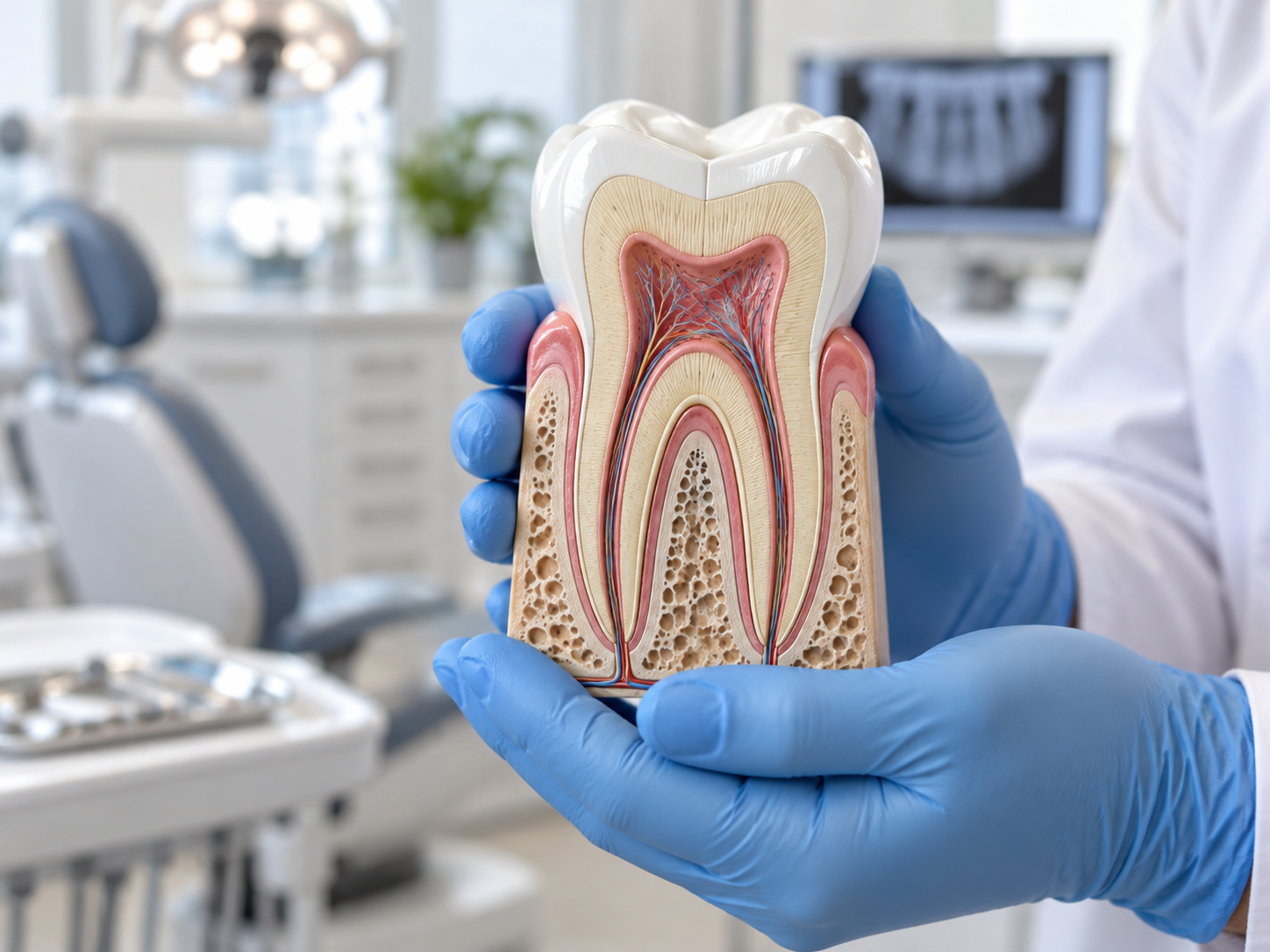
Endodontics is the branch of dentistry concerned with the pulp and the tissues around the root. Most cases are a straightforward root canal. Some need more, and we would rather tell you that up front than start something and hand it off.
Complex anatomy, calcified canals and retreatment cases are where specialist training earns its keep. If your tooth needs that level of care, we will tell you and coordinate it.
Related Treatments
Root Canal FAQs
Does a root canal hurt?
No. The procedure is done under local anesthesia, so it should feel no different from having a filling placed. The severe pain people associate with root canals comes from the infection itself, not the treatment. Most patients feel relief as soon as the inflamed pulp is removed. Mild soreness for a few days afterward is normal and responds to over-the-counter pain relievers.
How long does a root canal take?
Most root canals take between 30 and 90 minutes, depending on which tooth is being treated and how complex its canal anatomy is. Front teeth usually have a single canal and go quickly. Molars can have three or four canals and take longer. Treatment is often completed in one or two visits.
What happens during a root canal?
We take an x-ray, numb the area completely, and isolate the tooth. A small access opening is made through the biting surface, the infected pulp is removed, and the canals are cleaned, shaped and disinfected. The space is then filled with a biocompatible material called gutta-percha and sealed. In most cases a crown is placed afterward to protect the tooth.
What is the success rate of root canal treatment?
Root canal treatment succeeds more than 95 percent of the time, and a treated tooth that is properly restored with a crown can last a lifetime with normal brushing, flossing and regular checkups.
Why does my tooth still hurt after a root canal?
Mild sensitivity for a few days is normal while the tissue around the root settles down. Pain that gets worse after the third day, new swelling, or a bite that feels high should be checked. Intense pain returning weeks or months later can mean a canal was missed or a new infection has formed, both of which are treatable.
How long does pain last after a root canal?
Tenderness peaks in the first 24 to 48 hours and usually fades within a week. Anything that is still worsening past day three to five should be evaluated rather than waited out.
Can I eat right after a root canal?
Wait until the numbness has fully worn off so you do not accidentally bite your cheek or tongue. After that, stick to softer foods and avoid chewing on the treated side until the permanent crown or filling is in place.
What is the difference between a dentist and an endodontist?
Every endodontist is a dentist, but endodontists complete two to three additional years of residency focused specifically on the pulp and the tissues around the root. Fewer than three percent of dentists are endodontists. Many root canals are handled well by a general dentist. Complex anatomy, retreatment and surgical cases are where specialist training matters most.
Is it better to save the tooth or pull it?
Saving the natural tooth is almost always the better outcome. Extraction is a bigger intervention than it sounds, because the gap then needs an implant or a bridge to keep the neighboring teeth from shifting and the bite from changing. Nothing replicates a natural tooth root. We only recommend removal when the tooth is split below the gumline or too damaged to restore.
What affects the cost of a root canal?
The main factors are which tooth is involved, how many canals it has, and whether a crown is needed afterward. Front teeth are simpler than molars. Most dental insurance treats root canal therapy as a basic or major restorative procedure rather than a cosmetic one, so it is commonly covered in part. Every treatment plan is quoted after an exam, so contact us and we will go over your benefits and financing options before anything is scheduled.
Root Canal Treatment Across Chicago
With offices on Southport Avenue and South Michigan Avenue, we are within reach of most of the North Side and downtown. Patients come to us for endodontic care from across the city, including:
Schedule Your Appointment Today
Schedule your visit with Art of Modern Dentistry today. Our experienced dental team is here to listen to your goals, answer your questions, and help you find the right treatment for your smile and oral health.
Call us at 773.935.3600, contact us online or request an appointment to get started.
Request an Appointment