
Dental Botox: Beyond Wrinkles
How Botox Can Ease TMJ Pain and Enhance Your Smile
When most people hear the word Botox, they immediately think about smoothing wrinkles or achieving a more youthful appearance.
But Botox can have uses that go beyond traditional facial aesthetics.
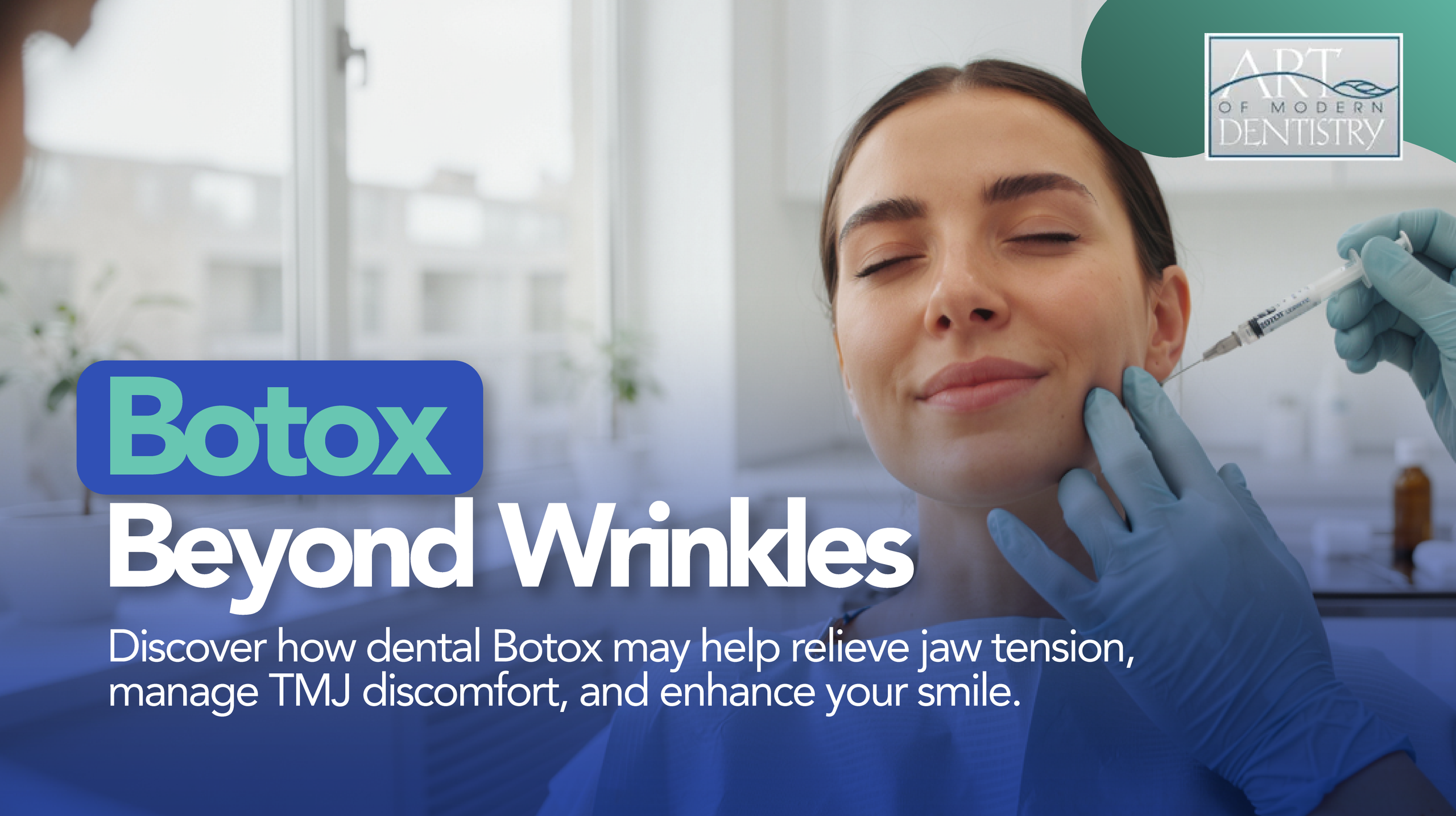
In dentistry, carefully placed Botox injections may be considered for patients experiencing excessive jaw muscle activity, clenching, grinding, and certain types of TMJ-related discomfort. It may also be incorporated into a personalized cosmetic treatment plan when the goal is to improve the overall balance of the smile.
At Art of Modern Dentistry in Chicago, our approach goes beyond simply looking at your teeth. We consider how your bite, jaw muscles, facial features, and smile work together when determining which treatments may be appropriate for you.
What Is Dental Botox?
Botox temporarily reduces activity in targeted muscles.
In a dental setting, this can be useful because the muscles surrounding your jaw and mouth play an important role in everything from chewing and speaking to clenching and smiling.
Depending on the patient’s needs, dental Botox may be considered to:
- Reduce excessive jaw muscle tension
- Help manage clenching or grinding
- Ease certain muscle-related TMJ symptoms
- Reduce stress placed on the teeth from forceful clenching
- Complement cosmetic dentistry by improving facial and smile balance
The important difference is placement and purpose. Dental Botox is not simply about changing your appearance. It may be used as part of a larger treatment plan based on how your jaw muscles, bite, and smile function.
Could Your Jaw Muscles Be Working Overtime?
Your jaw muscles are surprisingly powerful.
If you frequently clench your teeth during the day or grind them while sleeping, those muscles can remain overactive for long periods of time.
Signs you may notice include:
- Tightness or soreness around the jaw
- Pain near the jaw joint
- Morning headaches
- Neck or facial tension
- Clicking or popping when moving your jaw
- Difficulty opening your mouth comfortably
- Tooth sensitivity or worn tooth surfaces
- A tired or aching jaw after waking up
These symptoms can have several possible causes, which is why a professional evaluation is important before deciding on treatment.
How Can Botox Help With Jaw Tension and TMJ Symptoms?
For certain patients, Botox can be injected into specific jaw muscles involved in excessive clenching.
By temporarily reducing the strength of those muscle contractions, treatment may help decrease the amount of tension being placed on the jaw.
This may be particularly helpful when symptoms are strongly connected to muscular tension rather than a structural problem inside the jaw joint itself.
Some patients may notice:
- Less jaw tightness
- Reduced muscle soreness
- Less intense clenching
- Greater comfort during everyday jaw movement
- Less pressure on teeth affected by grinding
Botox is not automatically the answer to every case of jaw pain. TMJ symptoms can have different causes, so understanding what is contributing to the problem is an important part of choosing the right treatment.
What About Teeth Grinding?
Grinding and clenching, also known as bruxism, can put significant pressure on your teeth and jaw.
Over time, excessive force may contribute to:
- Worn enamel
- Cracked or chipped teeth
- Tooth sensitivity
- Jaw soreness
- Headaches
- TMJ-related discomfort
A custom nightguard can help protect your teeth from grinding forces, while Botox may sometimes be considered when powerful jaw muscles are contributing to severe clenching.
The goal is to understand why the problem is happening.
Depending on your situation, your dentist may recommend Botox, a nightguard, bite treatment, or a combination of approaches.
Dental Botox Can Have a Cosmetic Side, Too
Dental Botox isn’t limited to jaw discomfort.
Because the muscles around the mouth influence how your smile appears, carefully planned injections may also be used as part of a cosmetic treatment strategy to improve smile balance and facial harmony.
Think of cosmetic dentistry as more than simply changing individual teeth.
Creating a balanced smile can involve considering:
- Tooth shape
- Tooth color
- Gum appearance
- Lip position
- Facial symmetry
- The way your smile moves
Botox may complement other cosmetic services such as teeth whitening, veneers, bonding, Invisalign, or a comprehensive smile makeover when appropriate.
Botox Is Not a One-Size-Fits-All TMJ Treatment
One of the most important things to understand about TMJ discomfort is that there can be many different causes.
Jaw pain might be associated with muscle tension, grinding, stress, bite concerns, joint problems, or a combination of factors.
The first step should be an evaluation — not simply an injection.
Your dentist can examine your teeth, bite, jaw movement, symptoms, and muscle activity to help determine what may be contributing to the problem.
For some patients, conservative options such as lifestyle changes or a custom nightguard may be appropriate. Others may benefit from additional treatment.
A More Complete Approach to Your Smile
Your smile doesn’t exist separately from the rest of your face.
The health of your teeth, the alignment of your bite, the movement of your jaw, and the muscles surrounding your mouth can all influence how comfortable and confident you feel.
That is where dental Botox becomes especially interesting: for the right patient, it may bridge the gap between functional dentistry and cosmetic care.
At Art of Modern Dentistry, patients can explore general, restorative, TMJ, and cosmetic dental treatments with treatment plans built around their individual needs, comfort, and smile goals.
If jaw tightness, clenching, grinding, or concerns about your smile have been bothering you, a consultation can help determine what is actually causing the problem — and whether dental Botox belongs in your treatment plan.
Frequently Asked Questions
Is dental Botox only used for cosmetic purposes?
No. In dentistry, Botox may also be considered for excessive jaw muscle activity, clenching, grinding, and certain muscle-related TMJ symptoms.
Can Botox cure TMJ disorders?
No single treatment can address every type of TMD. TMJ symptoms can have different causes, so Botox may be appropriate for some patients but not others. A dental evaluation is important before treatment.
Can Botox help with teeth grinding?
Botox may reduce the strength of muscles involved in forceful clenching and grinding in selected patients. Your dentist may also recommend treatments such as a custom nightguard to help protect your teeth.
How do I know if dental Botox is right for me?
The best way to know is through an evaluation. Your dentist can look at your symptoms, jaw muscles, bite, tooth wear, and overall oral health before recommending treatment.
Can dental Botox be combined with cosmetic dentistry?
Depending on your goals, Botox may be incorporated into a broader cosmetic treatment plan alongside options such as whitening, veneers, bonding, Invisalign, or a smile makeover.
Explore Dental Botox in Chicago
If you’re experiencing jaw tension, clenching, grinding, TMJ-related discomfort, or concerns about the balance of your smile, Art of Modern Dentistry can help you explore your treatment options.
Schedule a consultation to find out whether dental Botox may be an appropriate part of your personalized treatment plan.
Schedule a Consultation